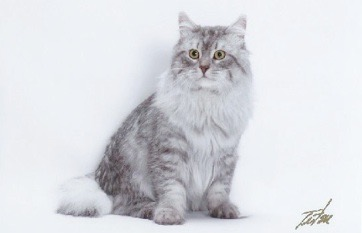
Siberian Research was founded in 2005 to providing information to pet owners and to assist breeders breeders improve the health of the Siberian cat.
photo courtesy of Alida Birch.
The primary goals of SRI were to:
- Determine what lines were affected by HCM
- Assist breeders in choosing unaffected lines
- Cooperate with universities studying Siberian HCM
We quickly found that HCM was far more prevalent, and early deaths more common than publicly acknowledged. These deaths had been hidden by breeders (and in some cases, contracts forbid illness disclosure). I would be remiss if I did not mention that several members of the group received multiple threats of lawsuit or physical violence from breeders with affected lines.
From 2005 to 2010, we
– Requested veterinary information from pet owners
– Evaluated reports with assistance from feline cardiologists
– Created a pedigree database of 5000 Siberians
– Obtained and linked pedigrees of affected cats
– Requested echocardiograms from breeders
– Mapped lines impacted by heart disease
At the end of five years, and thousands of hours of research. we had achieved our original goals, and extended the scope of the project several times. We decided to compile the information for public release, and published a summary of our study data. For legal reasons (mentioned above) we chose to remove specific information of several cases in the US, and all detailed disease mapping data.
As we compiled information, we found evidence of several other genetic illnesses, and widened our focus to include those as well. We have included those concerns in the website
The research coordinator for the group was Tom Lundberg, of Lundberg Siberians. In addition to diseases, Tom was interested in claims of hypoallergenic qualities of Siberians. Tom & Meredith Lundberg standardized fur and saliva tests, evaluated Fel d1 allergen levels in hundreds of adult Siberians, and proved some of the breed was low allergen.
Tom and Meredith created standardized test methods to measure allergen in young cats and kittens, and created copyrighted allergen charts to help people understand the severity of their allergens. They created, KittenTesting, providing allergen tests to Siberian breeders. As of 2025, they have worked with breeders test over 1200 kittens. Information on allergen testing and buying low allergen kittens is published here courtesy of KittenTesting.
The Siberian Research website is now hosted by Lundberg Siberians, in the hopes that information will help Siberian breeders reduce disease in their lines. Please note, The website is maintained to provide general information only. Information on heart disease in specific lines has not been updated since 2015.