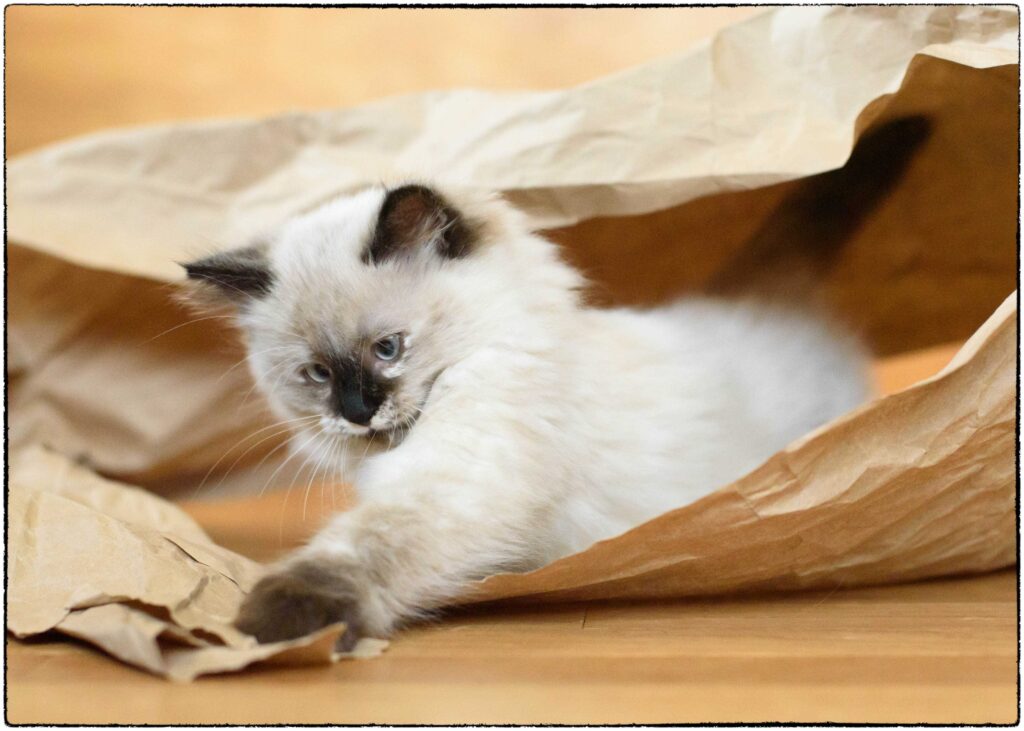
Siberians are a young breed, with an “open” registry. A promising cat on the street can become the foundation of a new line. Prior to the fall of the Iron Curtain, trade with Russia was more limited, and Siberians were predominantly warm black tabbies or Neva Masquerade (colorpoint). By the 90s, export of Siberian kittens was lucrative, and adding new colors improved sales. In some cases, diseases were also introduced.
Several genetic gum and teeth diseases are found in Siberians. These oral diseases are common in Maine Coon, Persian, and Himalayan. Outcrosses between Siberians and other breeds has increased the incidence of gum disease. While not permitted by any registry, Siberian Research documented outcrosses that were used to alter color, size and coat density. A single outcross in a high-end breed program might affect 1000 Siberians within a decade. Siberian Research tracked outcrosses by unusual blood types, genetic difference, disease progression, and through direct contact with breeders.
The two most severe gum diseases are FORLs and Stomatitis. These painful autoimmune gum diseases require routine dental treatment or complete removal of the teeth for the comfort of the cat. These are dominant hereditary disorders, so removing all cats with progressive or severe gum disease from breeding programs is mandatory. Breeders should not keep kittens from parents with hereditary gum disease, as they may develop disease at a later age.
(FORLs) – Feline Odontoclastic Resorptive Lesions
Feline tooth resorption begin as erosions in the surface of the tooth near the gum line. Teeth are lost due to fracture, and should be pulled as needed to reduce pain. This hereditary disease is most common in Persians.
(Stomatitis) – Feline Lymphocytic Plasmacytic Stomatitis/Gingivitis
Oral inflammation from stomatitis can be minor to life threatening. It is common in many breeds, primarily Himalayans, Persian, and Maine Coon. This disease typically begins as a red line across the gum line, and progresses to more severe inflammation. Cats with stomatitis may also develop bad breath.
Photos courtesy of Lundberg Siberians, all rights reserved,
Disease information is provided by Siberian Research without copyright protection,