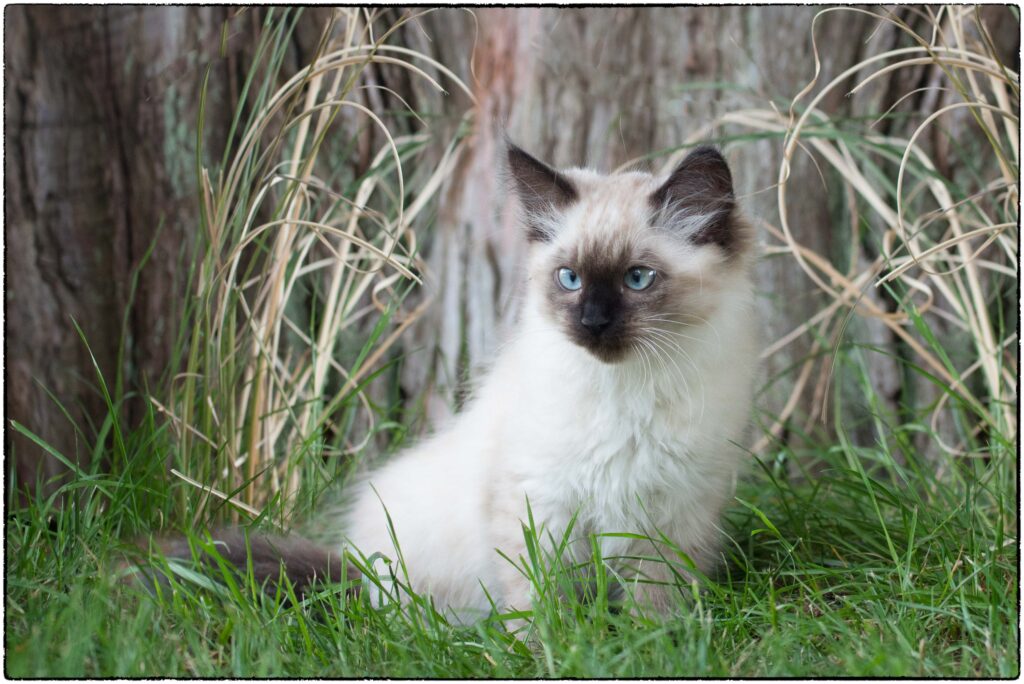
In recent years hypoallergenic cats have repeatedly made news headlines, and Siberian cats are often advertised as a hypoallergenic breed.
What is “hypoallergenic” where cats are concerned? Are all Siberians hypoallergenic? Can all allergy sufferers own Siberians?
Feline allergen is typically caused by Fel d1, a very small glycoprotein only found in cats. It is created in the salivary (saliva), sebaceous (skin), and perianal glands. Salivary Fel d1 becomes airborne during grooming. Sebaceous Fel d1 tends to be distributed across the fur, with the highest levels being found near the skin.Perianal glands secrete the allergen onto the feces.
Salivary Fel d1 becomes airborne during grooming. Sebaceous Fel d1 tends to be distributed across the fur, with the highest levels being found near the skin. As the coat allergen is excreted with oils, it sticks to hair, clothing, and furniture. Perianal glands secrete the allergen onto the feces. The highest concentration of Fel d1 is found in the perianal glands, so litterboxes tend to be problematic for asthma sufferers.
Feline allergen (Fel d1) is found only in cats, accounts for up to 60-80% of cat allergies. Typical reactions to the allergen vary, but can include symptoms ranging from mild runny nose and itchy eyes, to severe reactions such as swollen eyes, hives or difficulty breathing. Individuals allergic to cats and not other animals are usually (but not always) allergic only to Fel d1. The allergen is very small and stabile, and can remain in a home for six months after removal of the cat.
Ongoing research show that all cats produce some Fel d1, but the amounts are quite varied. Studies by KittenTesting have shown a strong correlation between allergen level in saliva and the reaction of highly allergic individuals. Siberians with very low allergen levels pass this trait to some (but not all) of the kittens in the litter.
Production and secretion of the Fel d1 allergen is controlled by hormones and stress. In normal cats, the highest levels allergen levels are found in un-neutered males. In very low-allergen Siberians, the males and females have similar levels of Fel d1.
There are other types of cat allergies, usually caused by two proteins (albumin & lipocalin). These proteins are also found In most mammals. Reactions to dogs, hamsters, and horses can cause cross-reactive allergies to cats. Individuals with allergies to other animals (especially horses/rabbits) can also react to low Fel d1 Siberians because of these secondary cat allergens.
In 2005, KittenTesting standardized methods to measure Fel d1 allergen levels of adult cats. The original research was part of a joint effort with U.C. Davis to search for genetic changes reducing reduce Fel d1 in Siberians. Several genetic changes were identified, though none that could be directly bred for. By 2010, KittenTesting developed methods that could be used with kittens. Test kits using these methods are marketed by Kitten Testing.
Photos courtesy of Lundberg Siberians – copyrighted, use prohibited. Allergen information is provided by KittenTesting. Please provide a website link to information from these pages.